

Irish Music Traditions
Irish Music Traditions
Irish Music Traditions Explained by Dublin Musicians
Traditional Irish music traditions are built on ornamentation, improvisation, and regional variation rather than written notation. Session culture in Dublin pubs remains the primary way musicians learn and transmit tunes, with distinct styles from Donegal, Clare, and Sliabh Luachra each shaping the sound differently.
If you've ever walked past a Dublin pub and heard a cluster of musicians playing without sheet music, locked into something that feels both ancient and spontaneous, you've witnessed the real thing. Traditional Irish music traditions aren't museum pieces. They're living, breathing, and constantly evolving, even as they honour centuries of history. As Dublin's original musical pub tour - running since 1993 and having welcomed approximately half a million people through these very doors - we've had a front-row seat to how this tradition works, breathes, and changes. Here's how it actually works, straight from the musicians who play it.
What Makes Irish Traditional Music Different From Classical or Folk Music?
Traditional Irish music is defined by ornamentation, improvisation, and modal scales rather than written notation or harmonic complexity. Unlike classical music, which relies on composers' exact scores, Irish traditional music is learned by ear and varies each time it's played. Unlike broader folk traditions, Irish music has highly specific regional styles, rhythmic patterns (reels, jigs, hornpipes, polkas), and a living session culture that actively transmits the tradition. Seán Ó Riada's ethnomusicological work established that Irish music uses ornamental variation as its primary means of expression, fundamentally different from Western classical music's harmonic approach.
The Living Tradition: Why Session Culture Defines Traditional Irish Music Traditions
Forget the concert hall. The heart of traditional Irish music beats in pubs.
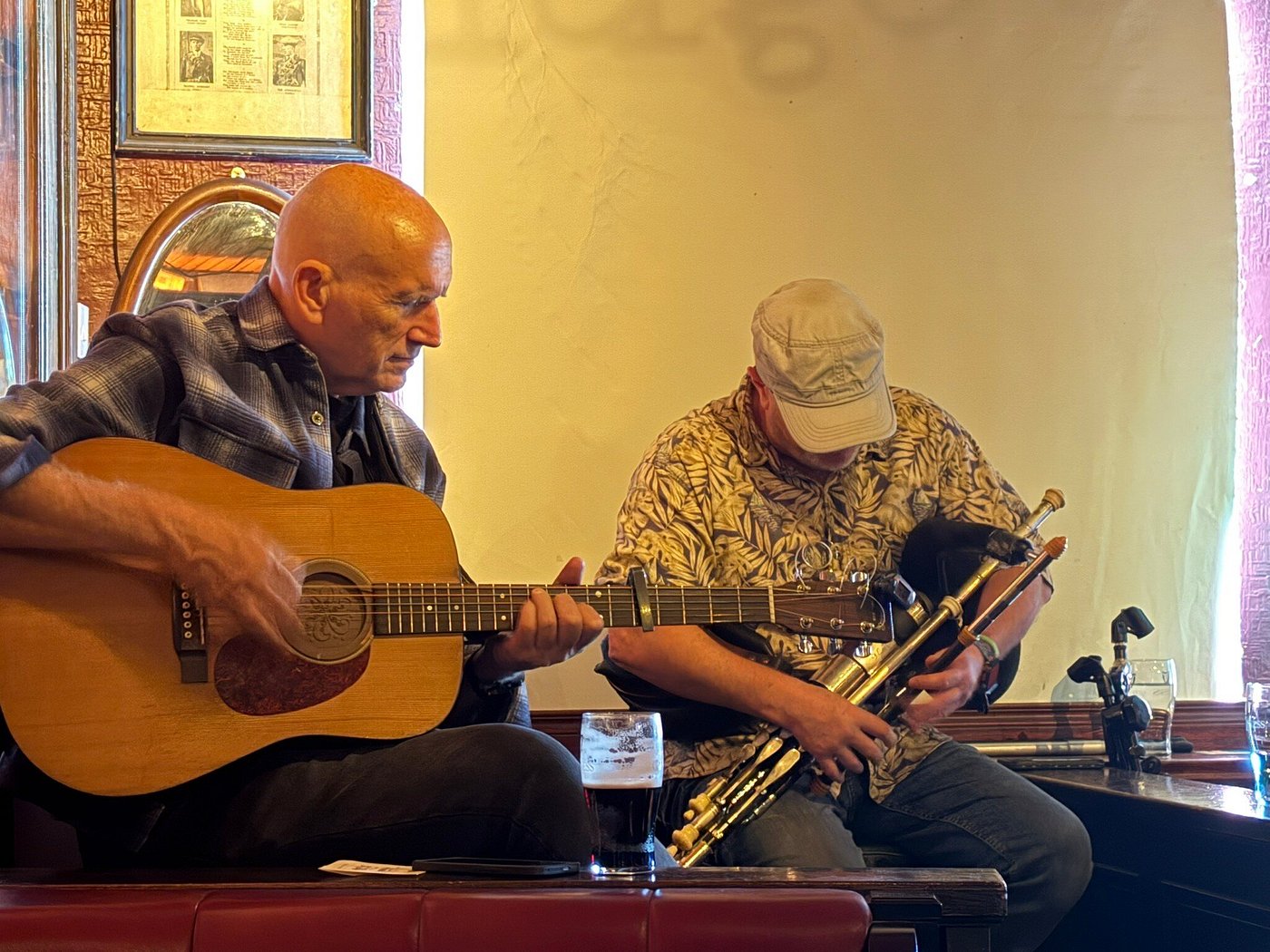
Irish traditional music sessions are informal gatherings where musicians sit in a circle (or a rough approximation of one), play tunes from memory, and feed off each other's energy. There's no setlist. No conductor. Someone starts a reel or a jig, and others join in when they know it.
As Fintan Vallely documents in The Companion to Irish Traditional Music, session culture emerged as the primary transmission method in the 20th century, replacing formal family teaching as urbanisation increased. That shift matters. It means the tradition didn't die when people left rural communities. It adapted.
But sessions have unwritten rules that trip up newcomers. You don't just sit down and start playing. You listen first, sometimes for weeks. You earn your spot. Based on 33 years guiding guests through Dublin's session culture - operating 230 nights per year across storied pubs - our two professional musicians say this etiquette, while frustrating for beginners, is what keeps the quality high and the tradition honest. [INTERNAL LINK: Dublin traditional music sessions]
And honestly? That's what makes it special. It is a meritocracy built on respect, not credentials.
Why Is Session Culture So Important to Irish Music Traditions?
Session culture is the primary mechanism for learning and transmitting tunes in the modern tradition, replacing formal family teaching as communities urbanised. Sessions create a living laboratory where musicians play tunes from memory, listen to regional variations, and develop their ear through repeated exposure. The unwritten etiquette - listening before playing, earning your spot, respecting the tune - preserves quality and keeps the tradition honest. Without sessions, Irish music would have become a museum artifact rather than a living practice that evolves while honouring its roots.
How Do Musicians Learn and Transmit Traditional Irish Music?
Dublin musicians we've worked alongside since 1993 consistently demonstrate that players who attend sessions two or three times a week develop far better ear and style than those who only take formal lessons. Tunes are passed down by ear through repeated listening at sessions and from other players. The experience of sean-nós singing, of hearing tunes repeated and varied in real time, teaches things no book can. Musicians develop ornamentation instinct over years of playing and listening, not from reading it on a page. That's why Irish musicians rarely use sheet music in sessions. The notation simply can't capture what matters most.
If you can't find an authentic session nearby, you can start by listening to archival recordings and learning tunes phrase by phrase. The key is patience. Traditional Irish music learning isn't a weekend project. Results vary from person to person, and that's fine. The tradition has survived centuries not because it's easy, but because it rewards those who stay with it. [INTERNAL LINK: things to do in Dublin at night]
The Instruments and Their Voices: How Fiddle, Bodhrán, and Pipes Create the Sound
Each instrument in a session has a role, almost like a conversation where everyone knows when to speak and when to listen.
The Irish fiddle typically carries the melody, though fiddle styles vary wildly by region. The uilleann pipes, Ireland's quieter, more expressive cousin of the Scottish Highland pipes, add a haunting drone and melodic complexity that nothing else replicates. The tin whistle fills gaps with bright, agile runs. Together, these melodic instruments create rhythmic subtlety without needing percussion.
Then there's the bodhrán. This one's controversial.
One widely cited theory, associated with the bodhrán's popularisation in the 1960s, links the instrument's origins to a simple farm implement such as a grain sieve - though scholars continue to debate its exact pre-revival history. It became a central percussion instrument only in the 1960s and 70s. Purists resisted it. They argued it disrupted the rhythmic subtlety that melodic instruments created on their own. Today, bodhrán playing techniques range from the traditional single-stick approach to complex modern styles using both ends of the tipper.
The bodhrán debate reveals something important about traditional music: it's not frozen in time. It argues with itself, adapts, and grows. After working with 500,000+ guests across three decades, our two professional musicians have found that the bodhrán is consistently the instrument that most surprises visitors - people arrive expecting the uilleann pipes to steal the show, and the bodhrán changes their mind every time. If you want to understand how these instruments interact in a live setting, you can study recordings at home. On the Musical Pub Crawl Dublin, our two professional musicians demonstrate exactly how each instrument functions within the ensemble, making the roles click in a way that recordings alone can't quite capture. [INTERNAL LINK: uilleann pipes explained]
What Are the Main Regional Styles of Irish Traditional Music?
Play the same tune in Donegal and Clare. You'll hear two different things. Irish music regional variations aren't random. Breandán Breathnach's research showed they reflect historical settlement patterns, migration routes, and local instrument preferences that persist across generations. Donegal style is heavily influenced by Scottish fiddle traditions, with a driving, rhythmic bow technique. Clare favours a more flowing, ornamented approach. Sliabh Luachra, straddling Cork and Kerry, developed its own polka and slide traditions shaped by set dancing.
These regional differences show up in ceili dancing music too. The rhythm shifts to match local dance forms, so a polka set from Sliabh Luachra feels completely different from a Connemara reel set.
Understanding these regional souls is what separates someone who appreciates Irish music from someone who truly gets it. The geography is in the notes. [INTERNAL LINK: Irish music regional styles]
The Art of Ornamentation: What Makes Irish Music Sound Irish
Here's the thing that surprises most people. Traditional Irish music uses modal scales, not the major and minor keys you learned in school.
Seán Ó Riada's ethnomusicological work established that Irish music uses ornamental variation as its primary means of expression, fundamentally different from Western classical music's harmonic approach. So when a fiddler plays a tune twice, it won't sound identical. They'll add cuts, rolls, crans, and slides - the Irish music ornamentation techniques that give each rendition its fingerprint.
This isn't showing off. It's the point.
What Is the Role of Improvisation and Ornamentation in Irish Traditional Music?
Ornamentation and improvisation are the primary means of expression in Irish traditional music, replacing harmonic complexity found in classical music. When a musician plays a tune, they vary it each time using cuts, rolls, crans, and slides - techniques that give each rendition its unique fingerprint. Jigs, reels, hornpipes, and polkas each have their own ornamentation conventions; a roll that works in a reel will feel wrong in a slow air. Musicians develop this instinct over years of playing and listening, not from reading notation. This is why Irish musicians rarely use sheet music in sessions - the notation simply can't capture what matters most: the living, breathing variation that keeps the tradition fresh while honouring its roots.
How Has Traditional Irish Music Evolved While Maintaining Its Traditions?
Traditional Irish music has evolved through instrument innovation, regional cross-pollination, and urbanisation without losing its core identity. The bodhrán's integration in the 1960s sparked debate but ultimately expanded the tradition's sonic palette. Session culture adapted from family-based rural transmission to pub-based urban learning, ensuring the tradition survived migration and urbanisation. Regional styles have influenced each other through increased travel and recording technology, yet each region maintains its distinctive character. The tradition argues with itself - purists resist changes, innovators push boundaries - but this creative tension keeps Irish music alive rather than frozen. Musicians continue to learn by ear, play from memory, and ornament tunes individually, preserving the core practice while allowing natural evolution.
Whether you're tapping your feet in a Dublin pub or picking up a tin whistle for the first time, you're part of something that's been handed down ear to ear, breath to breath. That's not nostalgia. That's a living tradition, and it's waiting for you.
Frequently Asked Questions About Traditional Irish Music Traditions
A session is an informal pub gathering where musicians play tunes from memory, with no setlist or conductor. Newcomers are expected to listen before joining. Unwritten etiquette governs who plays and when.
Tunes are passed down by ear through repeated listening at sessions and from other players. Attending sessions regularly develops instinct and style far more effectively than written notation alone.
Donegal favours a driving, rhythmic fiddle style influenced by Scottish tradition. Clare uses flowing ornamentation, while Sliabh Luachra developed its own polka and slide traditions rooted in local set dancing.
Ornamentation refers to techniques such as cuts, rolls, crans, and slides that vary the melody each time a tune is played. It's the primary means of expression in the tradition, replacing harmonic complexity.
Book your musical pub crawl or dinner show experience today!
book nowBook Your Show
book now


